
Digital Learning Project (DLP)
Transforming Classrooms Through Technology
Overview
The Digital Learning Project (DLP) is a school transformation initiative designed to integrate technology into everyday teaching and learning practices. The project focuses on improving foundational literacy and numeracy, digital learning practices, teacher capacity, and student academic outcomes. DLP is implemented in 20 government schools in Pune district, most of which serve children from working-class and marginalised communities.
The Problem
Government schools serving working-class and marginalised communities in Pune lack the tools and support to effectively adopt digital learning. Teachers have limited access to structured training and digital resources. Without sustained intervention, students from these schools face a compounding disadvantage in academic outcomes, including access to scholarship opportunities that require strong foundational skills.
The Solution
The project introduces digital learning tools, interactive learning games, FLN worksheets, teacher training workshops, and student mentoring programmes. Activity-based learning tools, including FLN activity sheets and learning games, help students practise foundational skills in a joyful and engaging manner. These tools are integrated with game-based learning modules from the V-School platform, making learning both structured and interactive.
Implementation
The initiative currently operates in 20 government schools in Pune district. Schools are supported through a sustained model that includes regular teacher capacity building workshops, ongoing mentoring of students, and integration of V-School platform tools into daily classroom practice. The project is supported by Bajaj Finserv CSR.
Scale & Reach
Partnerships
Teacher Capacity Building
Teacher training plays a critical role in the success of the programme.
Activity-Based Learning
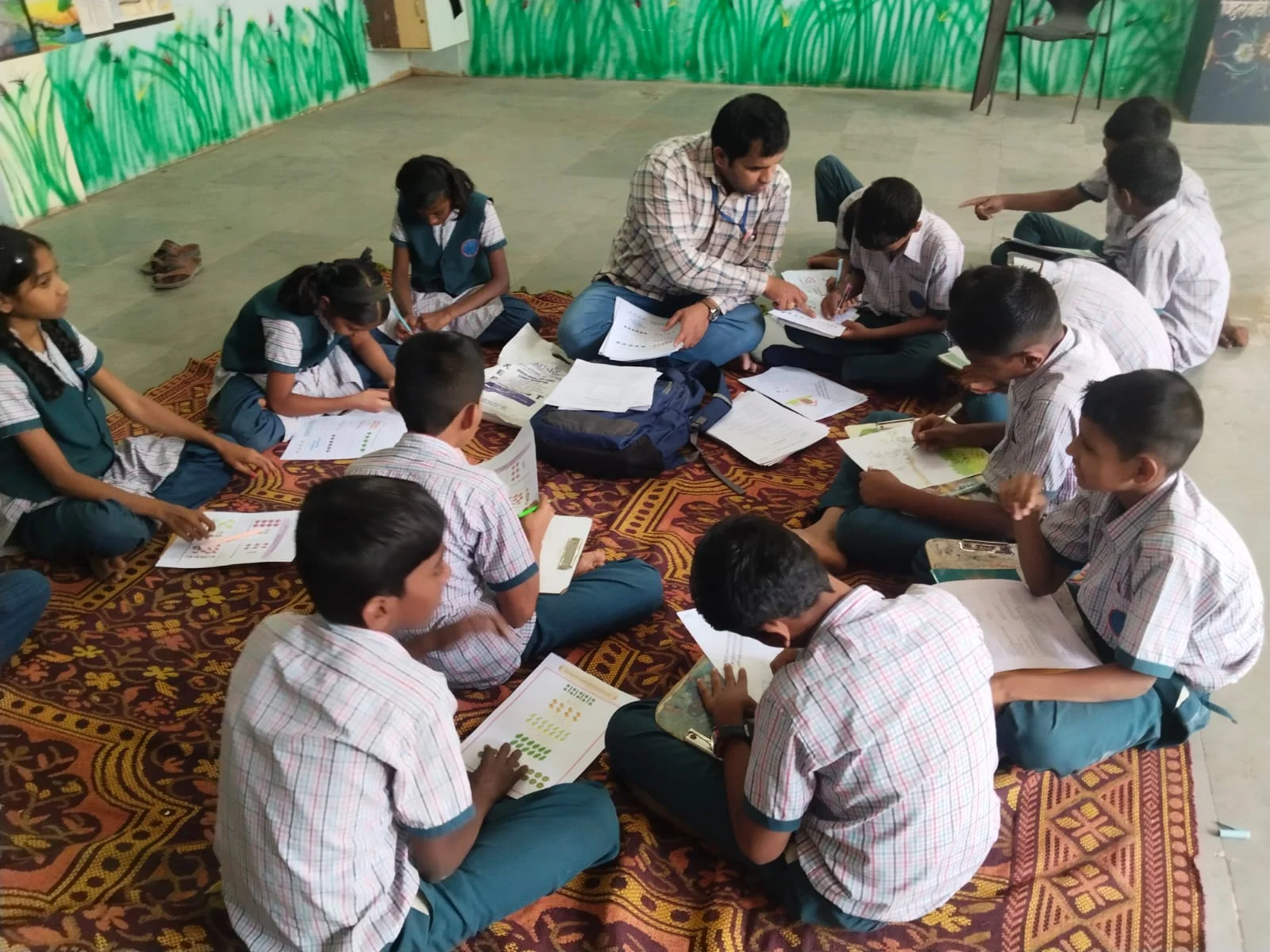
Students engage in hands-on, joyful learning activities designed to build foundational literacy and numeracy skills alongside digital fluency in the classroom.
Impact
73 students from participating schools qualified for scholarship eligibility, compared to 1–2 previously.
Teachers developed practical skills in integrating digital tools into everyday classroom teaching.
Joyful and engaging activity-based learning improved student participation in foundational skills practice.
Consistent academic mentoring and digital tools created measurable improvements in student outcomes over three years.
Case Story
73 Students Qualify for Scholarships
After three years of consistent implementation, 73 students from the 20 DLP schools qualified for scholarship eligibility. Previously, only one or two students from these schools would reach this threshold. This transformation in academic outcomes demonstrates how sustained digital learning support and teacher capacity building can meaningfully change what students from marginalised communities are able to achieve.
Key Learnings
Sustained, multi-year implementation produces compounding improvements in student outcomes.
Combining digital tools with structured teacher support is more effective than either alone.
Activity-based and game-based learning increases student engagement in foundational skills practice.
Schools serving marginalised communities can achieve significant outcome improvements with the right support systems.
An impact story from the Digital Learning Project, showing how technology integration in government schools is changing learning outcomes.