
Teachers’ Mental Health and School Education Conference
The Teachers’ Mental Health Conference brought together educators, practitioners, policymakers, and mental health experts to collectively reflect on one of the most critical yet often overlooked aspects of education the mental well-being of teachers.
The day began on a reflective note with a two-minute meditation, setting the tone for meaningful dialogue and openness. This was followed by the inaugural ceremony graced by respected dignitaries, Mrs.Kamaladevi Awate [Joint Director, SCERT, Pune] Hema Honwad [Educationist, Founder, Build a School in India], Prafulla Shashikant [Founder, Vowels of People Association] who emphasized the urgency and importance of addressing teachers’ mental health within the education ecosystem.
A special highlight of the inauguration was the release of the second anniversary edition of the VSchool Magazine, marking a milestone in documenting grassroots learning experiences and insights.
The opening remarks set a strong context for the day recognizing the challenges teachers face, while also celebrating their resilience. The dignitaries shared their thoughts, extended their support to the initiative, and reinforced the need for collective action.
The conference created space for teachers and partner organizations to share their lived experiences. These reflections brought authenticity and depth to the discussions, grounding them in real classroom realities.
Representatives from partner organizations contributed valuable perspectives, strengthening the collaborative spirit of the event. Their continued engagement highlights the importance of partnerships in building sustainable change.
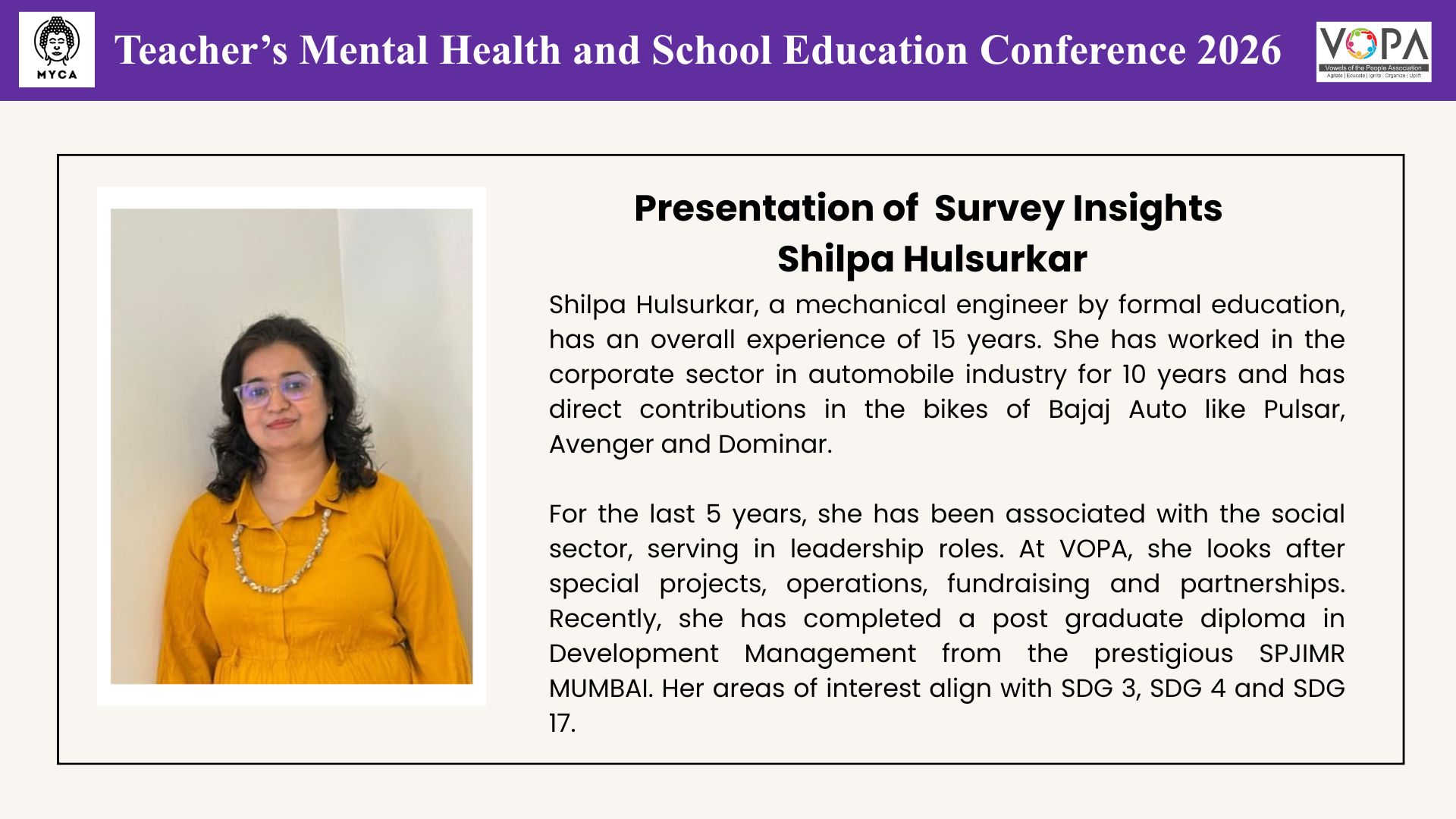
A key segment of the conference focused on presenting insights from VOPA’s survey, by Shilpa Hulsurkar shedding light on emerging patterns and concerns around teachers’ mental health.
This was followed by a compelling case study presentation by a practicing psychiatrist, Dr. Sagar Bhalke who shared real-world experiences from working closely with individuals facing mental health challenges. The session provided a deeper understanding of how psychological stress manifests and why early support systems are essential.
The conference featured two rich panel discussions with experts from diverse fields education, psychology, leadership, and policy.
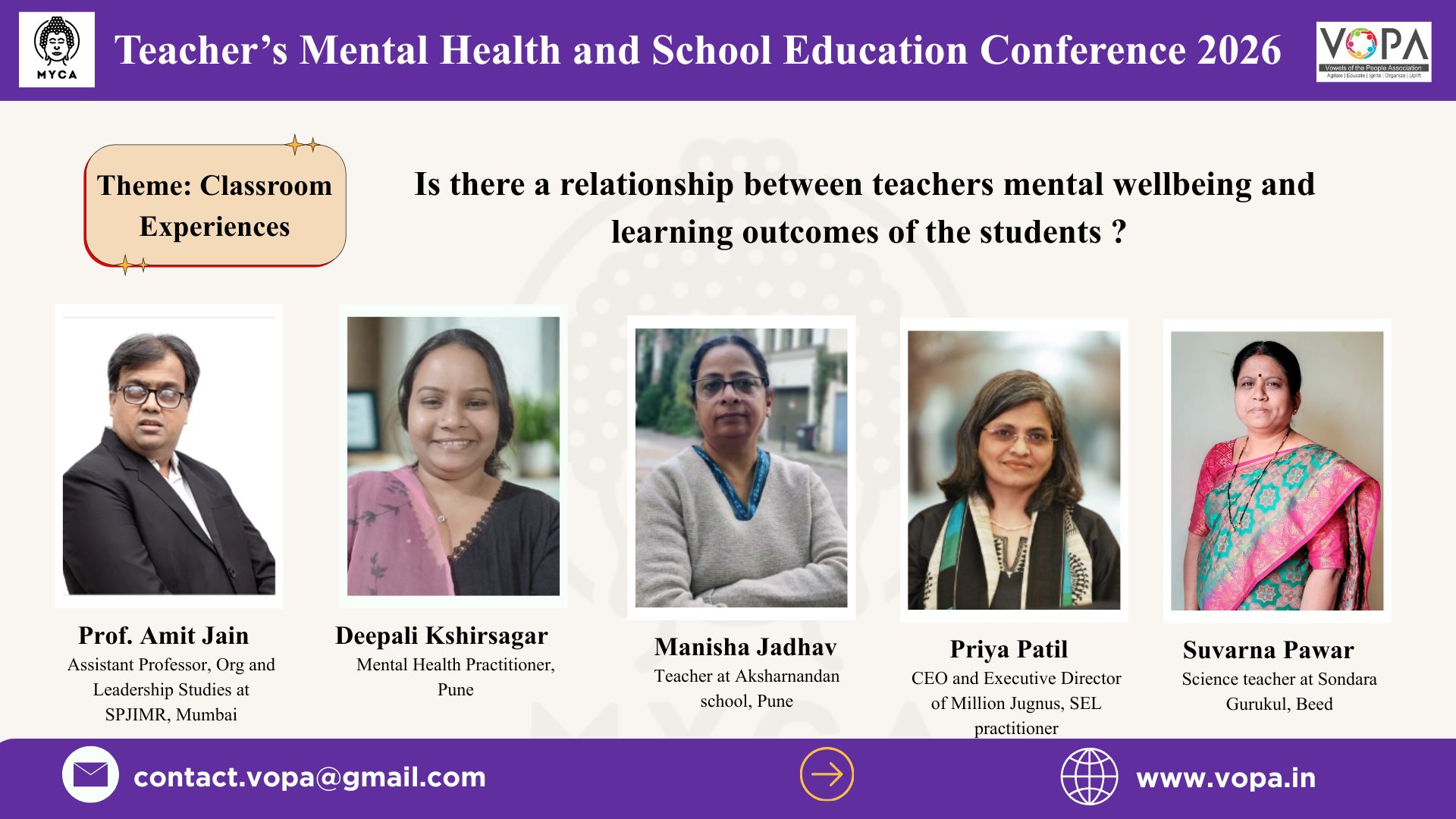
Theme 1: Classroom Experiences
Is there a relationship between teachers’ mental well-being and student learning outcomes?
Panelists Prof. Amit Jain [Assistant Professor, Org and Leadership Studies at SPJIMR, Mumbai], Deepali Kshirsagar [Mental Health Practitioner, Pune], Manisha Jadhav [Teacher at Aksharnandan school, Pune], Priya Patil [CEO and Executive Director of Million Jugnus, SEL practitioner], Suvarna Pawar [Science teacher at Sondara Gurukul, Beed] explored how emotional stress, burnout, and lack of support directly influence classroom environments, student engagement, and overall learning outcomes. The discussion highlighted that teacher well-being is not separate from student success it is foundational to it.
Theme 2: Policy Influence
Should teacher well-being be a policy mandate?
Panelists were Dr. Anil Gunjal [Ex Secretary of SSC board Maharashtra], Hema Honwad [Educationist and Founder, Build a School in India], Prachi Khandeparkar [Psychologist, Project Lead, SMHPP, Sangath], Prof. Dr. Sadhana Natu [Prof. & Head, UG & PG Dept. of Psychology, Modern College, Pune], Bhaskar Patil [Education Officer, Ahilyanagar].
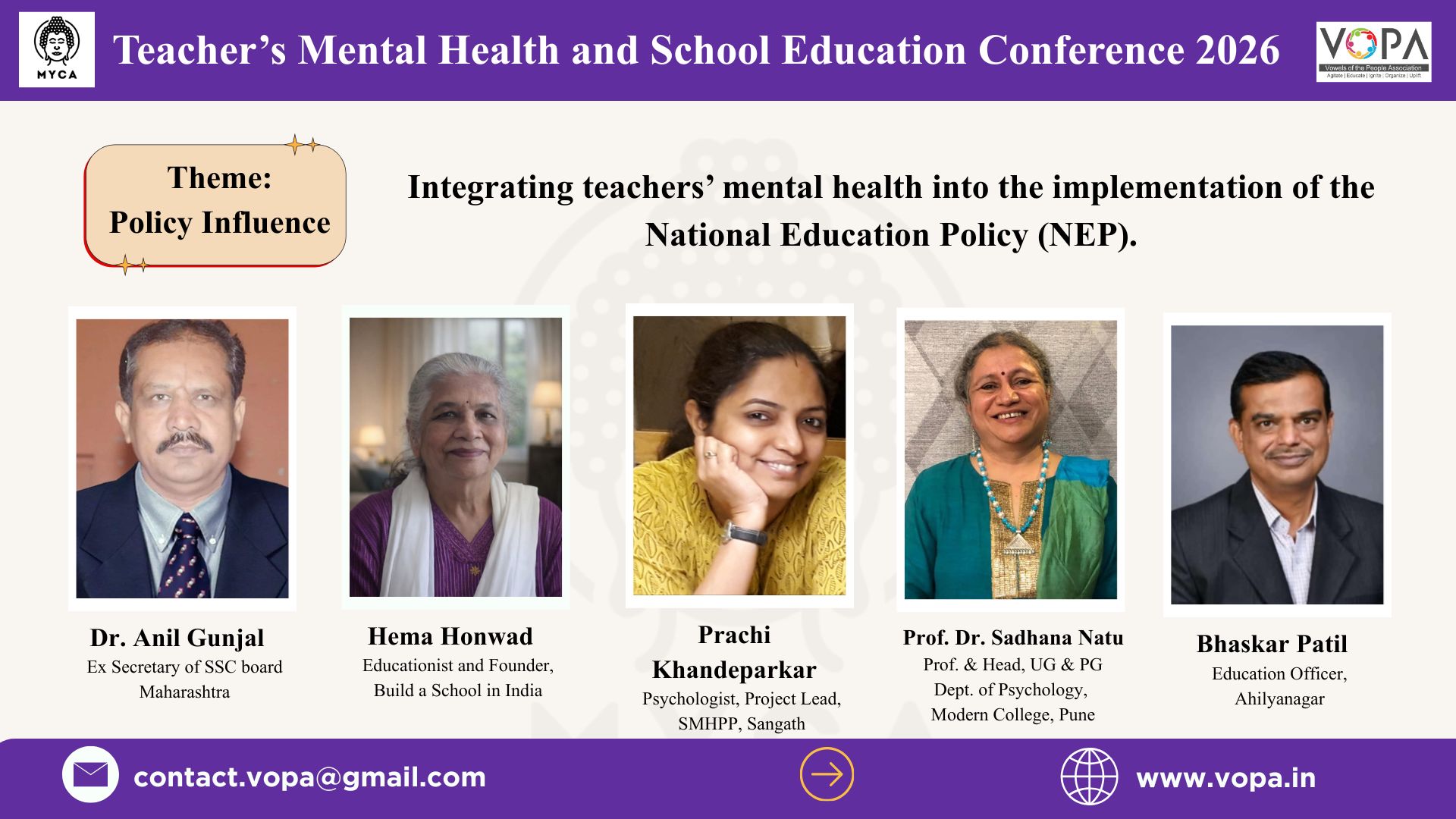
This discussion examined the need to integrate mental health into systemic frameworks like the National Education Policy (NEP). Panelists emphasized that without institutional support, individual efforts remain limited. The conversation called for embedding teacher well-being into policy design, implementation, and monitoring systems.
Post-lunch sessions brought deeply personal and thought-provoking reflections. Speakers shared lived experiences that challenged perceptions and encouraged introspection among participants.
These narratives served as a reminder that mental health is deeply personal, yet universally relevant and that safe spaces for dialogue can create powerful shifts in understanding.
Another case study presentation by Radha Joshi [educator and Dance Movement Psychotherapist] highlighted the role of young professionals in the education sector, showcasing how emerging voices are actively contributing to change.
The conference also celebrated the contributions of select teachers, acknowledging their dedication and efforts. Hearing their journeys reinforced the importance of recognition, empathy, and community support.
Participants were also introduced to the MYCA app, which offers a dedicated course on teachers’ mental health. This digital resource aims to provide accessible, structured support for educators, enabling continuous learning and self-care.
The Teachers’ Mental Health Conference was not just an event it was a collective call to action. It brought together diverse voices, sparked critical conversations, and laid the groundwork for future collaboration.
As we move ahead, the focus remains clear to build education systems where teachers are supported, valued, and mentally well because only then can learning truly thrive.