
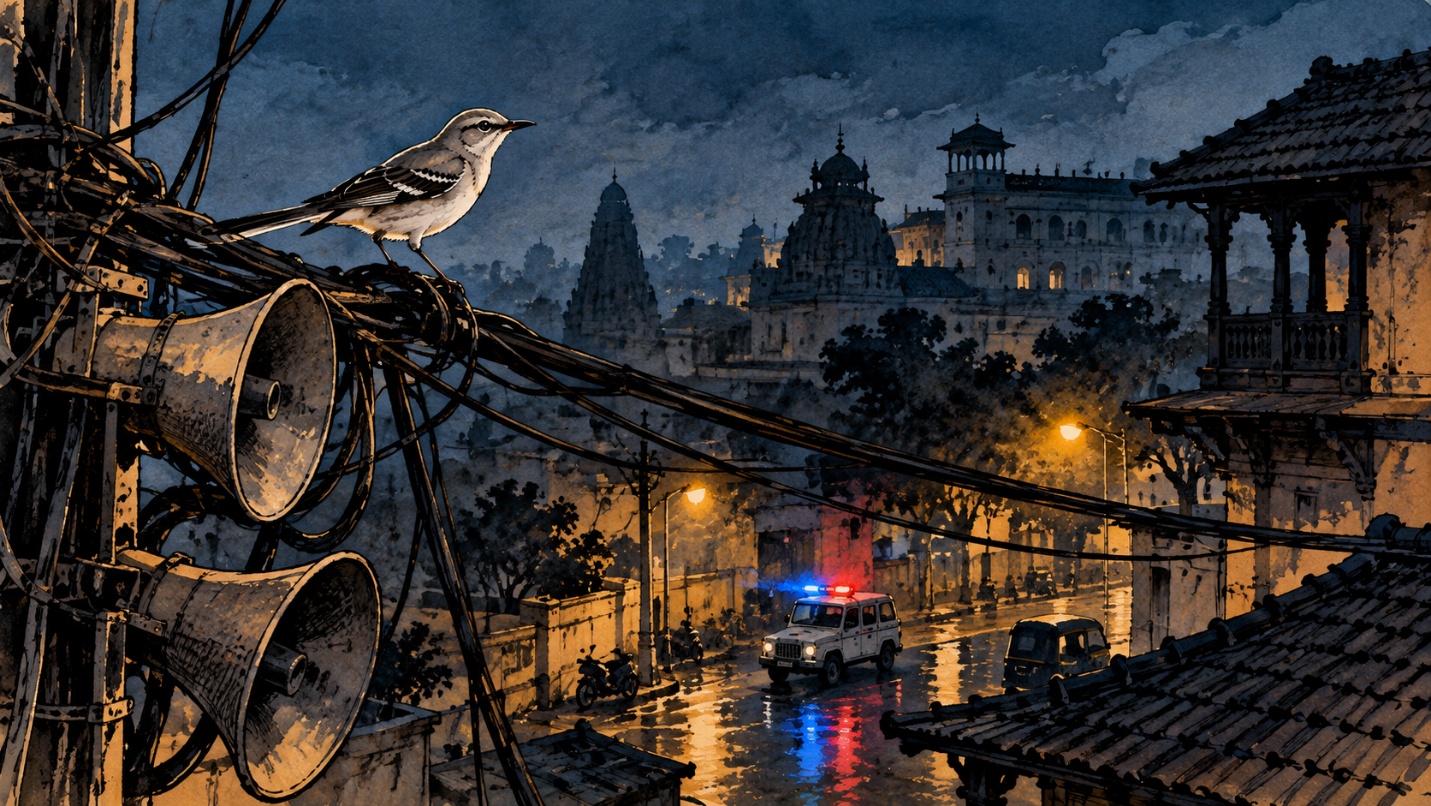
Who Will Protect Maharashtra's Mockingbirds?
In his piece, “Who Will Protect Maharashtra’s Mockingbirds?”, Prafulla Shashikant examines the shrinking space for citizens to question authority. Through incidents in Pune, he explores selective policing, public intimidation, and the use of ridicule to silence dissent. Drawing on Maharashtra’s progressive legacy, the article reminds us that democracy depends on the freedom to question, disagree, and demand accountability. A citizen’s voice is not a threat to democracy; it is one of its foundations.
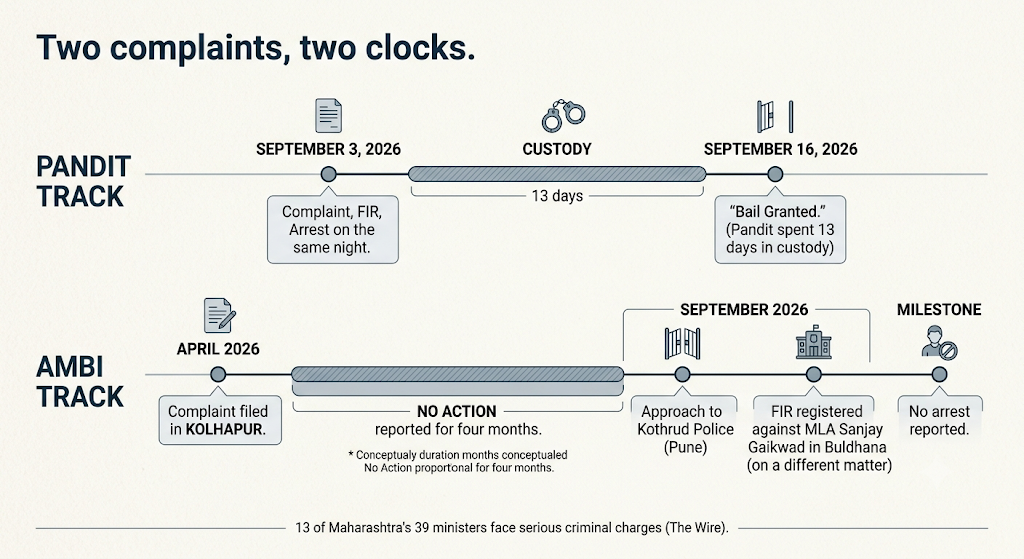
At around one in the morning on September 3, two police vehicles stopped outside a house in Kothrud. The family switched on their phone cameras. Santosh Pandit, a civic activist known for filming broken roads and politicians who ignore rules, handed his phone, car keys and belt to his family and got into the police car. The FIR against him was registered at Kothrud police station at around the same hour.
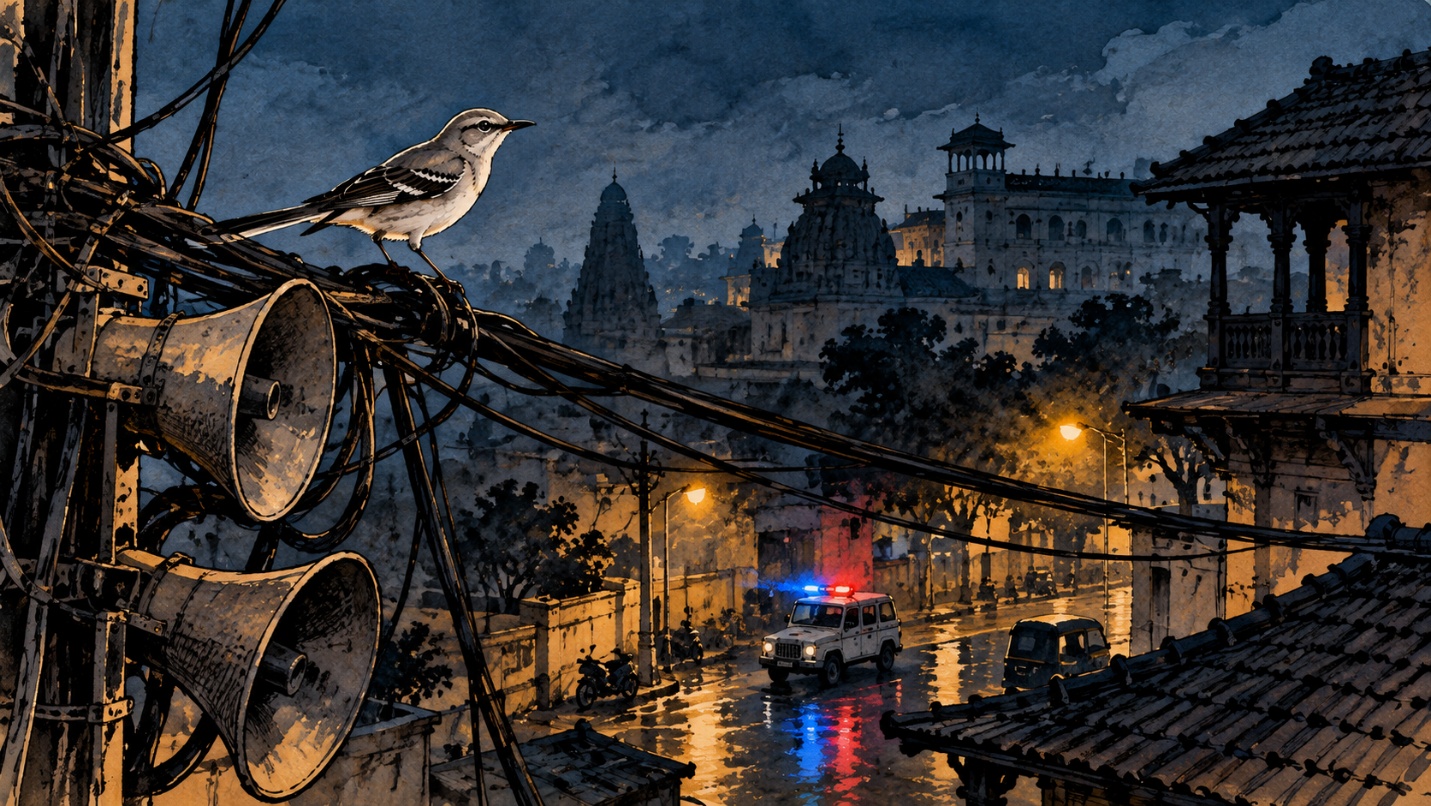
In the same week, a few kilometres away on Tilak Road, Vidyanand Bapat was speaking to a television channel about the noise of loudspeakers/DJs during Ganeshotsav. A man walked up and hit him. According to Bapat's complaint, he was called "anti-Ganesh" and an atheist.
Two men. One city. Same time.
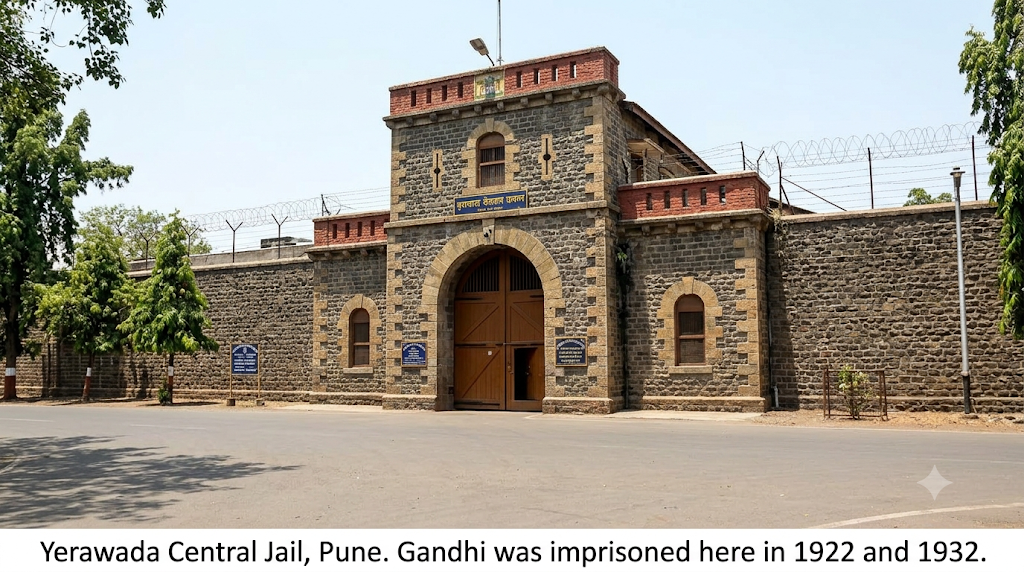
Today the country remembers the man - Mahatma Gandhi, who was jailed in Yerawada for questioning power. This September, Santosh Pandit was sent to the same jail. I am not comparing the two men. I am comparing the action they did, the question they both asked: may a citizen challenge those who govern him without being punished for it?
I have spent most of my working life alongside Maharashtra's public systems, trying to make visible what those in power would often rather not see. One lesson has stayed with me. Problems do not frighten systems, people who name problems do! That is why these two incidents have stayed with me for a month.
Two different kinds of pressure
These are not the same story, and it matters to say so.
Pandit faces the machinery of the State. The complaint, filed by a woman who works at the Pune Municipal Corporation, alleges that his videos contained obscene and sexually suggestive remarks about minister Chandrakant Patil and a woman corporator. The videos are public. Most people who watch them will say he might have crossed a line. If the allegations are proven, he must answer for them. Activism is not a licence to degrade anyone, least of all a woman.
But let us also be honest about something else. Language like this, and far worse, is heard from political stages and television debates in Maharashtra almost every week. It rarely brings the police to anyone's door at one in the morning.
Bapat faces something else: the crowd. The State, to its credit, arrested the man who assaulted him and gave Bapat police protection. His problem is not the police. His problem is what a section of society decided to do to him afterwards.
One story is about how the law is used. The other is about what happens when people stop needing the law to punish someone.
Fast for some, slow for others
The Constitution promises equality before the law. Not equality on paper. Equality in how quickly the police move, and whom they choose to wake up at one in the morning.
For the kind of offences Pandit is accused of, our law and our Supreme Court have said again and again that arrest should be the exception, not the first step. A notice to appear for questioning would have been enough. On September 16, a Pune sessions court granted him bail, observing that the investigation could continue without keeping him in custody. In plain words, the court did not think he needed to be locked up. By then he had already spent thirteen days in custody.
Now compare.
In April, publisher Prashant Ambi alleged that Shinde Sena MLA Sanjay Gaikwad abused him on the phone. Going by the published descriptions, the language in that audio clip, aimed at the women of Ambi's family, is far cruder than anything Pandit is accused of saying, and it came with threats to cut out his tongue and kill him. Whether the voice is Gaikwad's is for the investigation to establish. Ambi filed a complaint in Kolhapur. Four months later, his family said no action had followed, and his wife Aarti Ambi approached the same Kothrud police station that had moved so swiftly against Pandit. MLA Rohit Pawar sat in protest at the station and asked a simple question: if Pandit could be booked within hours, why not Gaikwad? Other women also tried to file a complaint against MLA Gaikwad with a literally similar wording (As against Pandit) but it was not accepted by the same police.
A case was eventually registered against Gaikwad, in Buldhana. But not over what he allegedly said to Ambi. It came over his remarks about a BJP MLA from his own ruling alliance. I have seen no report that he was arrested.
Read that sequence slowly. A citizen criticises a minister and is picked up the same night. A publisher's family waits for months. The law finally moves against the MLA when the offended person belongs to the ruling alliance.
This is not an isolated case. According to an analysis by The Wire, 13 of Maharashtra's 39 ministers face serious criminal charges, and one of them, alone has 38 FIRs. I have not read of any of them being collected from home at one in the morning.
Is every complaint true? Of course not. Should every complaint lead to arrest? Absolutely not. That is exactly the point. The standard must be the same for everyone. When the law is fast for critics of power and slow for power itself, it stops being a rule. It becomes a tool!
The woman who complained
There is a person in this story who is easy to forget, and I do not want to forget her.
The woman who filed the complaint against Pandit was allegedly trolled and threatened on social media after his arrest.
She had every right to go to the police, and I do not question that right. Every citizen has it, including the many women whose complaints never make the news. What I question is why the system answered her complaint within the hour and Ambi's not in four months. That choice was not hers. It was the State's, and the State owes us an explanation for it.
And whatever one thinks of the speed of the arrest, nobody had the right to abuse her for complaining. The people who went after her did to her exactly what others did to Bapat. They tried to make a citizen pay for using her voice.
If we defend Pandit's right to fair treatment but stay silent when his complainant is abused, we are not defending a principle. We are defending a side. The principle has to cover her too. Otherwise it is not a principle at all.
When the crowd becomes the censor
What happened to Bapat after the assault is, in some ways, more disturbing than the assault itself.
During Ganesh immersion processions, AI-generated videos showing Bapat dancing to DJ music were played on giant LED screens while crowds cheered. A local rapper released a song saying Bapat deserved a slap and should be lifted and slammed to the ground. A lawyer sent Bapat a notice demanding an unconditional apology to Hindu devotees within 48 hours.

Some will call this humour. Some will call it the people's answer. I call it what it is. A man raised a question about noise, about the health of the elderly, about children and animals, and he was turned into a public joke so that nobody else would dare raise it again.
Notice how effective this is. Nobody is arrested for a meme. Nobody is charged for dancing. A deepfake is not a lathi. And yet the message reaches every citizen watching: this is what happens to people like him.
The Constitution gives us freedom of speech, with reasonable limits. It does not promise that our speech will be popular. But it assumes that the answer to speech we dislike is more speech, argument, disagreement. Not ridicule organised to silence.
The man who asked for the law
Here is what makes Bapat's case almost absurd.
He was not asking for anything outside the law. He was asking for the law. Limits on loudspeakers and sound systems already exist, backed by environmental law and the Supreme Court's rules on noise. The Bombay High Court has taken note, on its own, of noise during religious processions. Before this year's festival, Pune's own Police Commissioner warned mandals that cases would be registered against those who exceeded the limits, and announced decibel checks at 120 points along the immersion route. And in 2018, Chief Minister Devendra Fadnavis, defending his own government's ban on DJ and Dolby systems, said that Lord Ganesh does not need them.
So Bapat said nothing that a court, a police commissioner and a chief minister had not already said. He simply said it without power behind him.
And what happened? Local reports from the immersion procession described the police as helpless and the noise as crossing every limit. The man who asked for the rule to be followed was slapped. The people who broke the rule danced to a deepfake of him.
If this is the rule of law, why was the law the only thing that did not show up?

Who is the mockingbird?
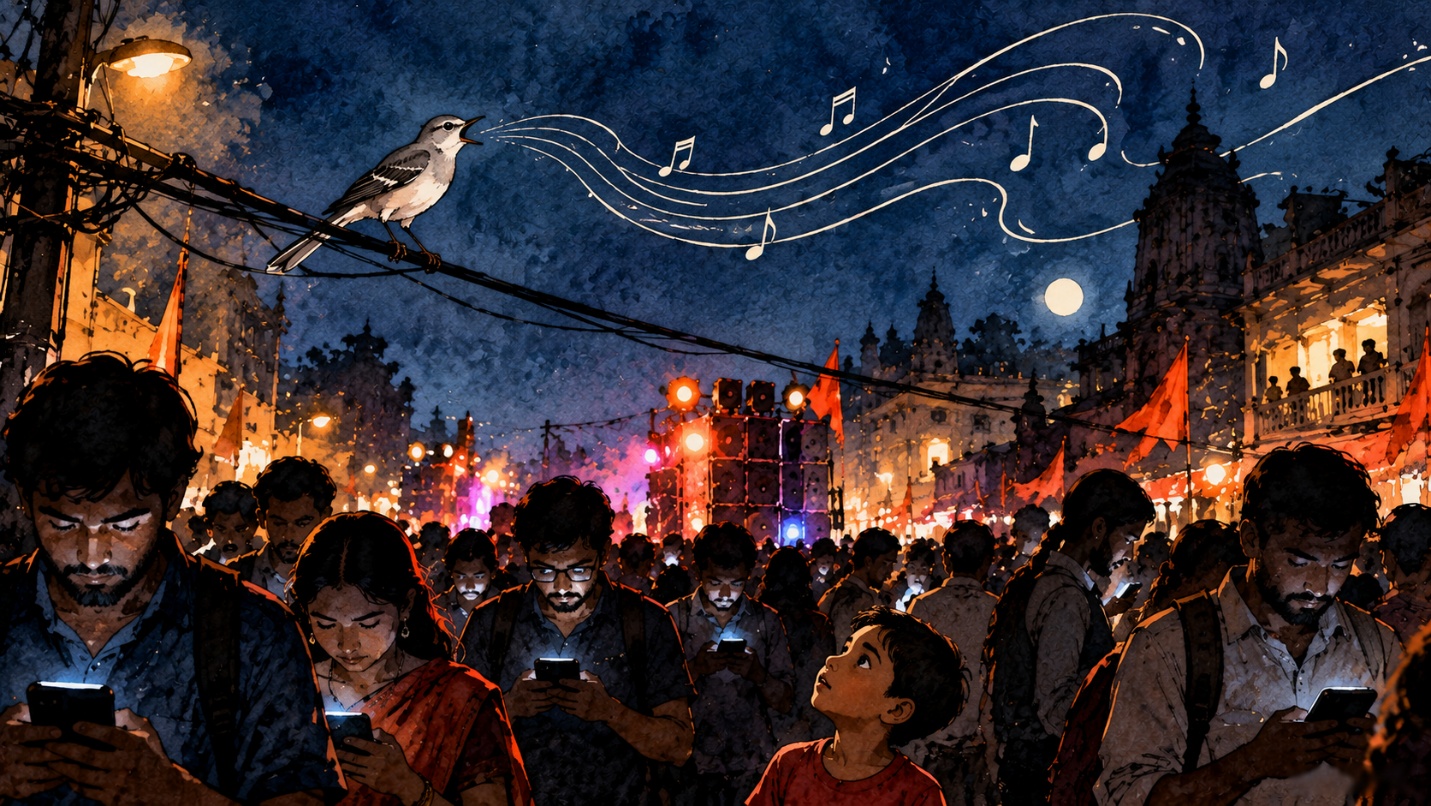
In Harper Lee's To Kill a Mockingbird, Atticus Finch tells his children that it is a sin to kill a mockingbird, because a mockingbird harms no one. It only sings.
The mockingbird is not any one person. It is the citizen's right to question. The right to point a camera at a number plate. The right to say a festival has become too loud. The right of a woman to walk into a police station and complain. The right to be treated by the police exactly as an MLA would be treated.
That right harms no one. It only sings. And in Pune this September, we watched it being hunted from three directions at once: by selective policing, by violence on the street, and by organised ridicule online and offline.
Maharashtra knows better
Maharashtra's progressive tradition was never built on consensus. Jotiba Phule questioned caste when questioning it could cost him everything. Savitribai walked to the school where she taught while people threw dung at her, on these very streets of Pune. Agarkar argued with Tilak in public. Ambedkar asked questions that most of the country wanted buried. Every one of them was, at some point, inconvenient. Every one of them was mocked.
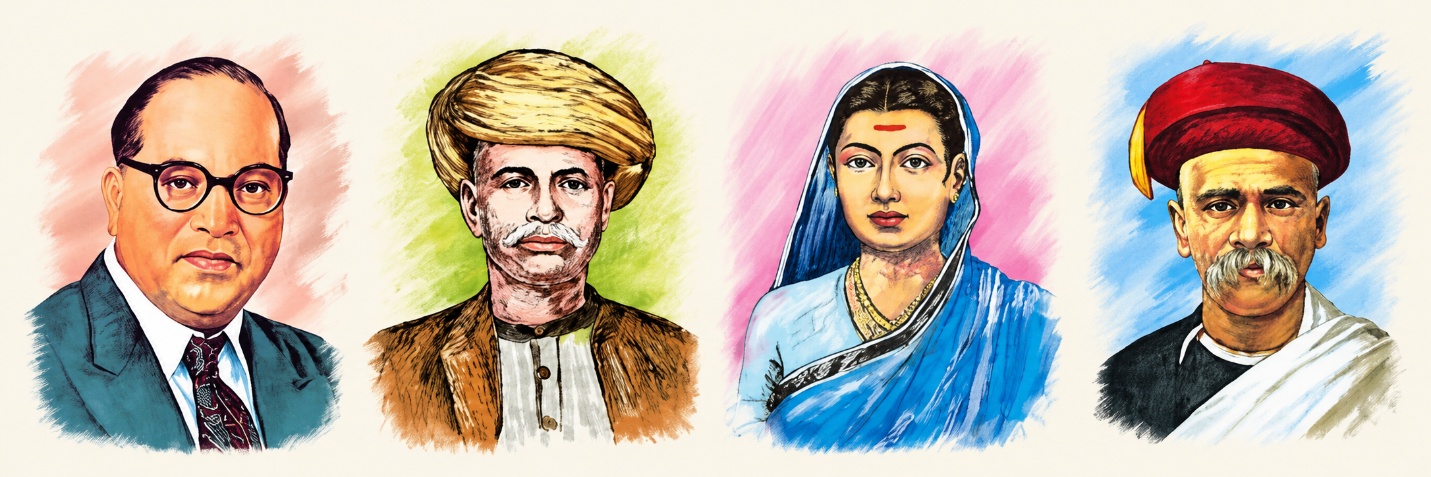
Even our bitterest disagreements were argued out in the open. In 1932, inside Yerawada jail, Ambedkar and Gandhi faced each other across the deepest divide of the freedom movement. Ambedkar later called the pressure of Gandhi's fast a form of coercion, and he was right to say so. But even that dispute was fought in words, across a table, in public view. Nobody was picked up at midnight for disagreeing.
What threatens that tradition today is not one dramatic act of censorship. It is accumulation. A midnight arrest here. A slap there. A deepfake, a song, a legal notice, an army of trolls. Each one deniable on its own, but together, a system!
And gradually, everyone learns the same lesson: don't speak.
This is how a democratic culture dies, not always with censorship. Sometimes it dies through exhaustion.
But this September also showed me something else. Large numbers of Pune's citizens, people in their seventies and eighties among them, people from every party, some walking with their pets, marched to the Municipal Corporation demanding action on loudspeaker/DJ noise. Some carried photographs of both Bapat and Pandit. The march was described as spontaneous. They came because they still believe that a citizen's question deserves an answer.
That is the Maharashtra I recognise.
The test
So the real test is not whether we like Santosh Pandit's language or agree with Vidyanand Bapat about DJs.
The test is simpler. Can a citizen of this state question a minister and expect argument, not arrest? Can a citizen ask for the law to be enforced and expect action, not a slap? Can a woman complain about abuse without being abused for complaining? And will the police move as quickly for a publisher threatened by an MLA as they did for a minister criticised by a YouTuber?
If we cannot answer yes to all four, then the problem is bigger than two men and one city.
In March 1922, standing trial for sedition, Gandhi told the court that affection cannot be manufactured or regulated by law. A century later, on his birth anniversary, I would add only this: neither can it be extracted at one in the morning.
The mockingbird is still singing. The question is whether the rest of us will let it.

(Prafulla Shashikant works on public education and social equity in Maharashtra. Views are personal)